

NASA Doesn't Get to Swap an Astronaut Mid-Mission: What Artemis II Reveals About Irreversible Hiring Decisions
NASA can’t swap astronauts mid-mission. Here’s what that teaches about irreversible hiring decisions and leadership risk.
What the Artemis II crew selection reveals about the hiring decisions your company can't afford to get wrong.

Antonio Javiniar
Antonio Javiniar is the Sr. Marketing Manager for Teamtailor in North America.
In April 2026, four astronauts will climb into NASA's Orion spacecraft, leave Earth's atmosphere, and travel farther from our planet than any human crew has ventured since Apollo 17 in 1972. The ten-day Artemis II mission will carry them on a free-return trajectory around the Moon and back.[1]
No rescue mission follows. There is no abort-to-orbit once the translunar trajectory is committed. If something goes wrong with the crew (with their judgment, their psychological resilience, their ability to function as a unit under pressure) NASA cannot fix it from Houston.
That is not a statement about the limits of space travel. It is a statement about hiring.
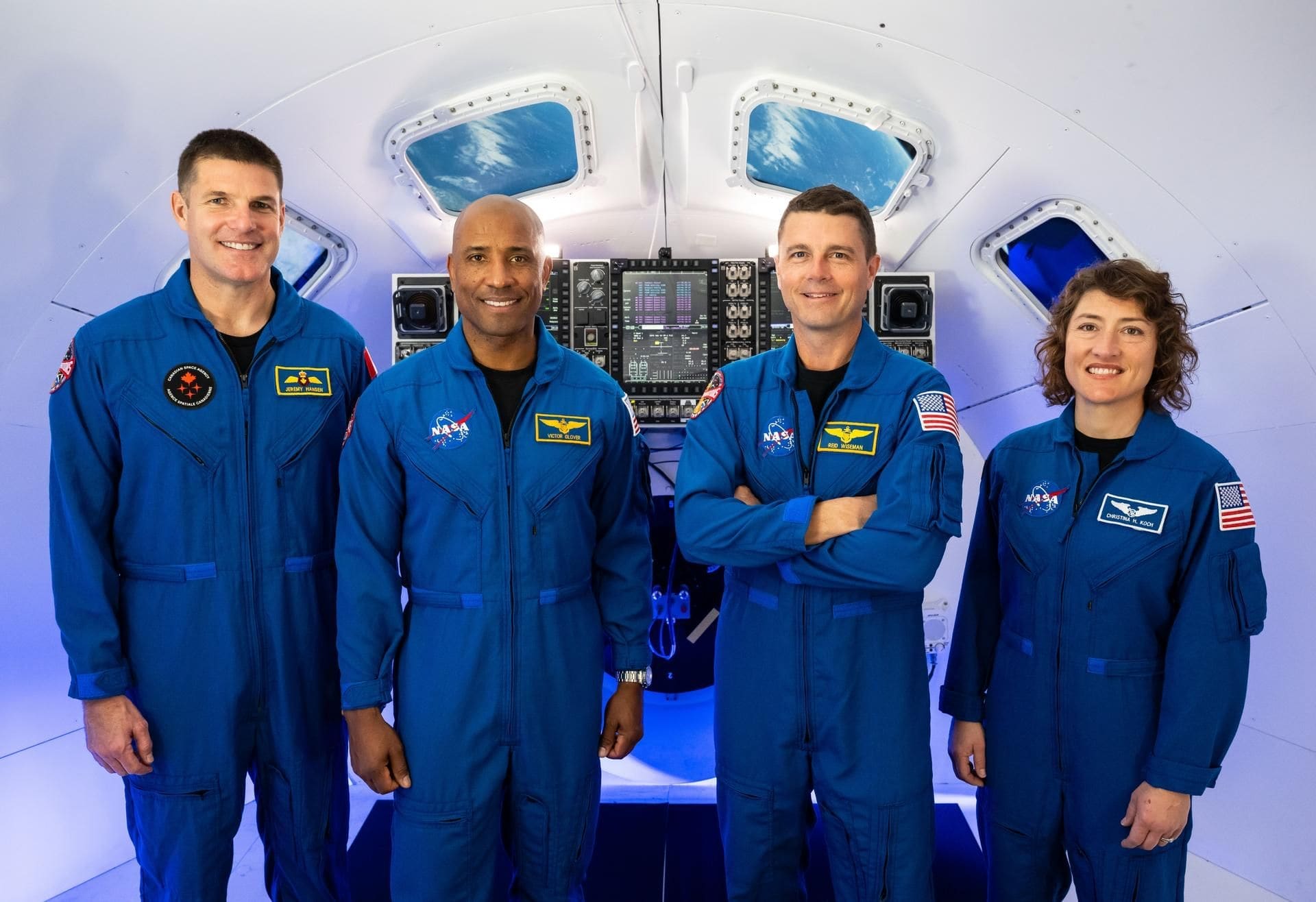
NASA announced the Artemis II crew on April 3, 2023: commander Reid Wiseman, pilot Victor Glover, and mission specialists Christina Koch and Jeremy Hansen.[2] They were not selected because they were available, or because a headcount needed filling. They were selected through years of demonstrated performance, psychological evaluation, and observed behavior under genuine pressure — because by the time the rocket ignites, the talent decision is locked.
Everything from that moment forward is a consequence of the hiring.
This is the truth that high-stakes teams understand, and most companies never do: some decisions cannot be revised. Some hires embed themselves into the structure of what's possible so completely that no amount of management, coaching, or performance intervention can undo them.
The only moment to get them right is before they're made.
Why do most companies assume all hiring mistakes are fixable?
The dominant philosophy in corporate hiring, particularly in high-growth companies under pressure to scale, is that people are largely correctable. You hire, you onboard, you coach, you manage performance, and if something isn't working, you move on and hire again. The system is designed around reversibility.
This assumption is not entirely wrong. Many hiring decisions are operationally recoverable. An individual contributor who turns out to be a poor culture fit can be exited without structural damage. A specialist who lacks one skill can be developed or supplemented. The organization absorbs the mistake at some cost and moves forward.
But this assumption becomes dangerous when applied to roles that are not, in fact, reversible and most organizations never map which of their roles falls into which category.
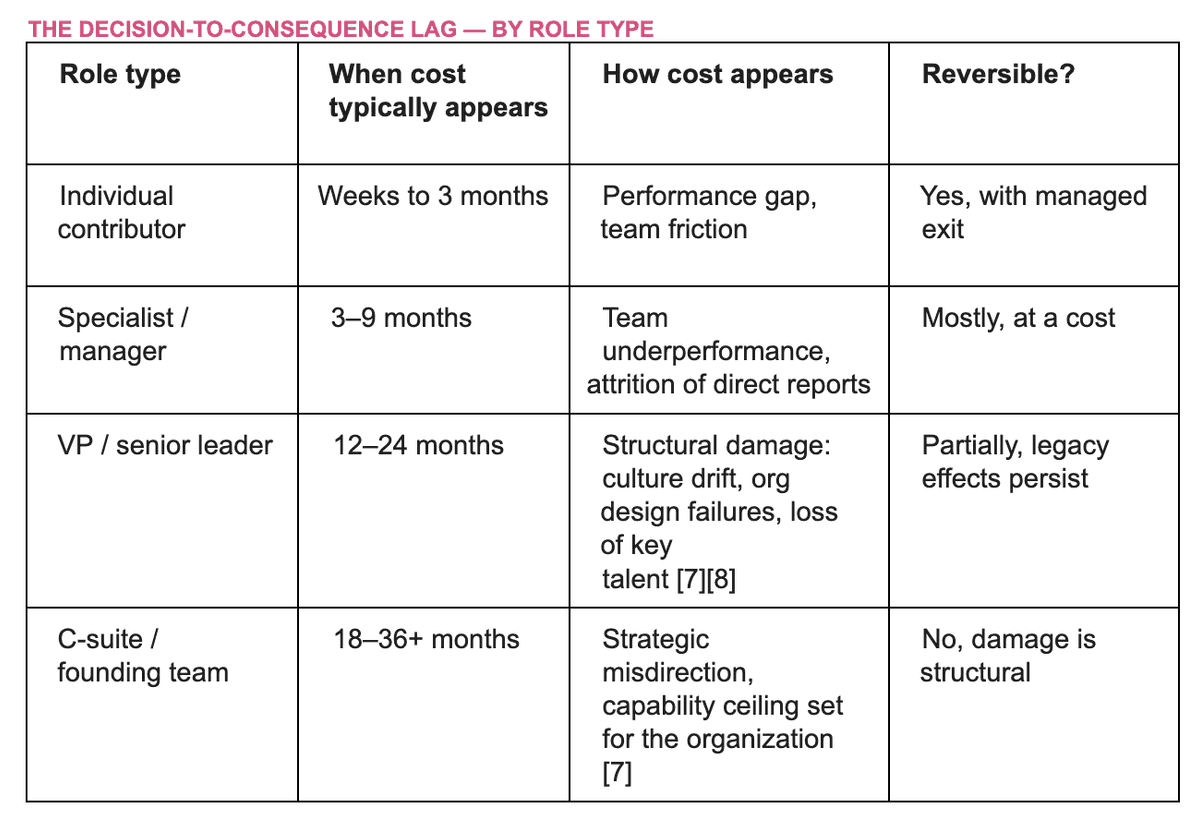
- Senior leadership positions reshape the teams beneath them within weeks. The VP of Engineering you hire this quarter will shape your technical culture, your architecture decisions, and your ability to retain senior engineers for the next three years.
- Founding team members set constraints that persist for the life of the company. As Y Combinator's Paul Graham writes: "the success of a startup is almost always a function of its founders" and "changing your cofounders is hard."[3]
- Early hires in a scaling function define the ceiling of what that function can become. The first five engineers at a product company. The first revenue leader. The first people leader. These decisions don't just fill roles. They determine what's buildable.
Most companies treat all hiring with the same level of urgency. They move fastest on the decisions that cost the most to get wrong.
Download: The Talent-Led Playbook
How does NASA select astronauts and what does that process reveal about high-stakes hiring?
The Artemis program does not begin crew selection when the rocket is ready. It begins years before launch.
The four astronauts selected for Artemis II were drawn from NASA's active astronaut corps, a pool that itself requires years of prior selection, training, and observable performance before a candidate is eligible to fly.[2]
Each member of the Artemis II crew brings a documented track record of functioning under real pressure:
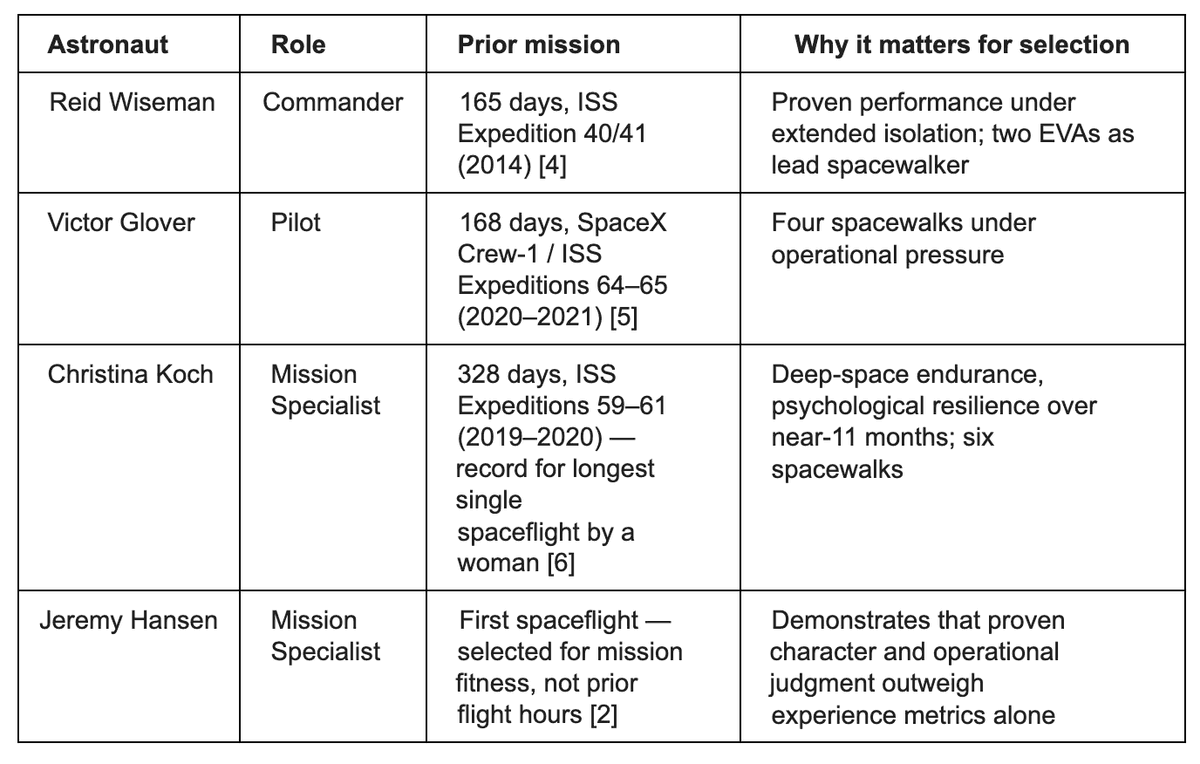
None of this experience was accumulated in direct preparation for Artemis II. It happened because NASA operates a talent philosophy oriented toward the long view: invest deeply in identifying and developing people whose capabilities are not yet needed, so that when the mission arrives, the selection is already proven.
NASA's selection philosophy rests on a distinction most organizations never make explicit: the difference between competence and mission-fitness.
- Competence is measurable and partly transferable.
- Mission-fitness is the alignment between a person's specific qualities (psychological, relational, operational) and the demands of the exact context they will be placed in.
A technically brilliant engineer may lack the composure deep space demands. A decorated pilot may be unable to sustain collaborative decision-making under extreme stress.
Mission-fitness cannot be assumed from competence. And in contexts where it cannot be corrected, it must be evaluated with corresponding care.
NASA doesn't rush the selection because it understands what most companies don't: the cost of getting this wrong isn't a performance conversation. It's the mission.
Why is the cost of a wrong hire almost always discovered too late?
One of the reasons irreversible hiring decisions are so dangerous is that their cost is almost always delayed.
According to the Society for Human Resource Management (SHRM), replacing a senior employee can cost between 50% and 200% of their annual salary[7] and for executive-level positions, CareerBuilder's research places the average loss at $240,000 or more when all associated costs are included.[8] But these figures capture only direct replacement costs. They do not capture the structural damage that compounds invisibly in the months before the wrong hire is even identified as wrong.
The wrong VP of Engineering doesn't reveal itself on day one. They're productive in their first quarter. They generate early wins, earn goodwill, and appear aligned. The structural damage — architectural decisions that can't be undone, senior engineers who quietly start looking elsewhere, technical debt that accumulates because the wrong person shaped the roadmap — becomes visible 12, 18, 24 months later.
A 2024 CareerBuilder study found that 75% of employers reported making a bad hire, and that the average reported loss was $17,000 per bad hire across all levels, with executive mistakes reaching multiples of that.[8] The same research identified the most common cause of bad hires as pressure to fill roles quickly.
Pressure doesn't create weakness in a team. It reveals the decisions that were already made.
NASA understands this at a structural level. The conditions of deep space — communication delays, confinement, isolation, unscripted emergencies — are not things the mission creates. They are things the mission reveals. The crew either has the psychological architecture to manage them, or they don't. That determination was made in Houston, not in lunar orbit.
What is the difference between high-confidence hiring and slow hiring?
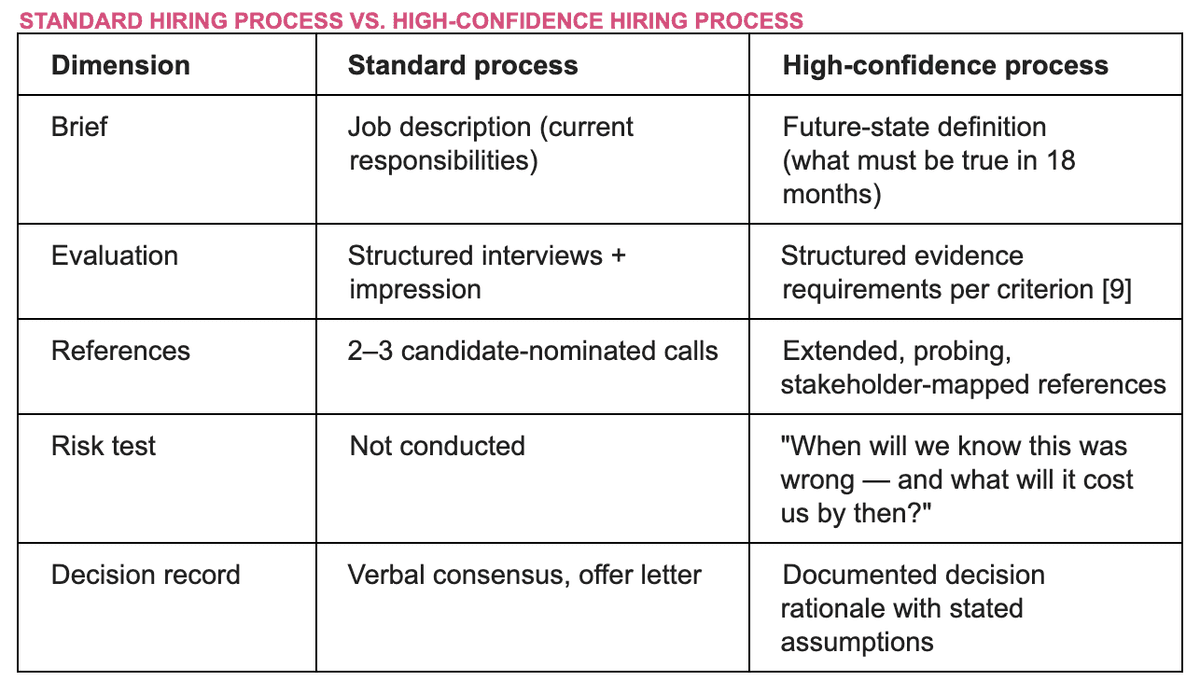
High-confidence hiring is not slow hiring. It is not cautious hiring in the sense of being tentative or uncertain. It is hiring that is deliberately calibrated to the reversibility of the role being filled — moving quickly where speed is appropriate, and applying disproportionate rigor where the decision is structurally consequential.
Research by Schmidt and Hunter found that structured interviews are approximately twice as effective at predicting job performance as unstructured conversations.[9] Yet most organizations apply structured processes inconsistently, and rarely define in advance what observable evidence would constitute proof of a selection criterion.
Measuring every hire by time-to-fill is like measuring every building by construction speed. Acceptable for a warehouse. Catastrophic for a bridge.
High-confidence hiring for structurally consequential roles typically requires elements that standard processes omit:
- A future-state hiring brief, not a job description. Rather than defining the role in terms of current responsibilities, the brief defines the person in terms of what the organization needs to be true in 18 months. What problems must they have solved? What will the team look like that they've built or inherited?
- Structured evidence requirements, not impressions. For every selection criterion, the process defines in advance what observable, verifiable evidence would constitute proof, shifting evaluation from intuition to demonstrated behavior.[9]
- Deliberate exposure to the actual conditions of the role. NASA doesn't evaluate astronaut candidates only in controlled environments. NASA observes them in the field, under stress, over time. For a VP-level hire, this might mean structured work on a real problem with key stakeholders, or extended reference conversations that go beyond the candidate's prepared list.[2]
- Explicit scoping of what notto do in the first 90 days. Many senior mis-hires fail not because people lack capability but because capability developed in a different context gets applied too fast in the wrong direction.
- A documented decision. The reasoning behind a consequential hire — why this person, why now, what assumptions the selection rests on — should be recorded in a form that can be revisited if the hire goes wrong.
What is Talent-Led Growth and why does this matter for business leaders who aren't hiring yet?
The question that most hiring processes never ask is deceptively simple:
If this hire turns out to be wrong, when will we know and what will it cost us by then?
The answer to this question, mapped across a company's open roles, immediately reveals which decisions require disproportionate care and which can tolerate more speed. It identifies the roles where the gap between decision and consequence is long enough that the company will be deep into the damage before the error is identifiable.
Great recruiting teams know this intuitively. They feel the weight of consequential roles. They push back when leadership wants to rush a senior search to relieve the pressure of an open headcount because they understand that the pressure of a vacancy is temporary and the cost of the wrong hire is not. The U.S. Department of Labor estimates that a bad hire costs at least 30% of the employee's first-year earnings.[10] For senior roles, that figure is the floor, not the ceiling.
But this intuition is rarely codified, rarely becomes policy, and too often gets overridden by time-to-fill metrics, visible headcount gaps on a roadmap, and the impatience of hiring managers who want someone in seat. And so the organizations that most need high-confidence hiring processes are often the ones moving fastest through exactly the decisions they can least afford to get wrong.
This is what Talent-Led Growth means in practice. It is not a philosophy about hiring harder or more slowly. It is the recognition that organizational outcomes are determined by deliberate talent decisions and that growth happens when hiring is treated as infrastructure, not as a service function that responds once stakes are already set.
The organizations that internalize this aren't just building better teams. They are building organizations whose future states are already, quietly, decided.
What can business leaders learn from the Artemis II crew selection?
The four astronauts flying around the Moon were not selected because they were available. They were selected because NASA had built a talent system capable of identifying, over years of observation, the specific combination of capability, character, and mission-fitness that the program required.
That system is expensive by corporate standards. It is slow by the measure of time-to-fill. And it is predicated on one understanding: that the cost of getting the selection wrong is not a number you want to calculate after the mission is already in jeopardy. As SHRM's research confirms, replacing even a mid-level employee can cost up to twice their annual salary[7] — and that figure does not include the structural and strategic costs that accumulate in the months before a wrong hire is even identified.
Your organization is not flying to the Moon. But you have roles that are, in their own context, just as unforgiving. A founding CTO whose architectural decisions will constrain your technical infrastructure for a decade. A first Head of Sales whose hiring philosophy will shape the revenue culture you'll either reinforce or spend years repairing. A VP of People who will either build the talent system that lets you scale, or preside over one that makes scaling harder than it should be.
These are not positions you fill when they become urgent. They are decisions you make with the gravity they deserve, before pressure demands you move faster than the decision can support.
Growth is decided by talent decisions long before results appear. The organizations that understand this aren't just hiring better. They're making fewer decisions they can't undo.
NASA doesn't get to swap an astronaut mid-mission. The selection is the strategy. Most companies don't see it yet. The ones that do are already, quietly, building organizations whose outcomes are decided in the hiring process long before results appear.
Ready to become the next HR Hero?
References:
All sources verified as of March 2026.
- NASA — Artemis II Mission Overview — nasa.gov/mission/artemis-ii
- NASA — Artemis II Crew Announcement, April 3, 2023 — nasa.gov — Artemis II crew profiles
- Paul Graham — "Startups in 13 Sentences" (2009): "the success of a startup is almost always a function of its founders" — paulgraham.com/13sentences.html
- NASA — Reid Wiseman biography (165-day ISS mission, Expedition 40/41, 2014) — nasa.gov/people/reid-wiseman
- NASA — Victor Glover biography (168 days, SpaceX Crew-1, ISS Expeditions 64–65, 2020–2021) — nasa.gov/people/victor-j-glover-jr
- NASA — Christina Koch biography (328-day ISS mission, record for longest single spaceflight by a woman) — nasa.gov/people/christina-koch
- SHRM — Replacing an employee costs between 50%–200% of annual salary; total bad-hire cost can reach $240,000 for senior roles — shrm.org/topics-tools/news/employee-relations/cost-bad-hire-can-astronomical
- CareerBuilder / INOP — 75% of employers report making a bad hire; average loss $17,000 across all levels, $240,000+ for executive hires (2024) — inop.ai/the-true-cost-of-a-bad-hire-in-2026
- Schmidt, F.L. & Hunter, J.E. (1998) — "The Validity and Utility of Selection Methods in Personnel Psychology" — structured interviews are ~2× as effective as unstructured in predicting job performance — Psychological Bulletin, 124(2), 262–274 — via APA PsycNet
- U.S. Department of Labor — a bad hire costs at least 30% of the employee's first-year earnings — dol.gov — via HBK CPA summary