

The short answer: mostly one category with many names
Recruitment management system, recruitment tracking software, candidate tracking system, applicant management system, HR tracking system. Search for any of them and the results mix the same handful of products. In almost every case the page you land on describes an applicant tracking system (ATS): software that enables the electronic handling of recruitment and hiring, with uses that include posting jobs, filtering candidate databases, scheduling interviews and reporting.[S1]
A buyer who stops there can still sign the wrong contract. The labels do split in two places. A few vendors use "recruitment management system" for a bundle that also covers sourcing and relationship work. And "HR tracking system" often points to something else entirely, a record of employees rather than candidates. This guide sorts out which label means what, how to tell from a vendor's own pages which one you are being sold, and what to check before the name on the website matters.
It is written by a company that makes an applicant tracking system. Where we describe how something works in Teamtailor, we say so, and where a point is true of every vendor we say that instead.
No standards body defines these terms. The table in the next chapter is how we read them, not a sourced definition, and it carries no numbers. The test that always works is in the later chapters: look at what the software does with a person between "applied" and "hired".
The names, side by side
Teams that already run a hiring process usually meet these terms in a vendor shortlist, an RFP template or a line from finance asking what "that recruitment thing" is called in the budget. This table is our reading of them when they appear on a vendor's site, not a vendor-agreed standard.
| Label you see | What it usually means | What to confirm |
|---|---|---|
| Applicant tracking system (ATS) | The system of record for jobs, applications, stages, interviews and decisions | If it includes a career site, scheduling and reporting, or expects you to add them |
| Candidate tracking system | The same thing with a different noun. Some vendors use it when the pool of past and prospective people matters as much as the current applicants | If people who never applied can sit in the system |
| Applicant management system | The same thing again, often a translation of a local term | Nothing special, check the feature list |
| Recruitment management system | An ATS, or an ATS plus sourcing, a talent pool and job advertising in one product | Which of the extra parts are built in and which are separate products |
| Recruitment tracking software | The query a buyer types. On vendor pages it means an ATS, sometimes a lighter one that tracks candidates in a list | How many stages, users and jobs it holds, and whether reporting is included |
| Recruitment CRM | Software for keeping in touch with people before they apply | If it shares a record with the ATS |
| HR tracking system | Ambiguous. Can mean an ATS, or a human resources information system (HRIS) that tracks employees | Whose records it holds: candidates, employees, or both |
One definition from outside the industry is worth keeping in mind. An encyclopaedia entry on the topic describes an ATS as software that enables the electronic handling of recruitment and hiring, and says it resembles a customer relationship management system, built for recruitment tracking.[S1] That second half is why the labels blur: the moment an ATS keeps a record of a person over time, it starts to behave like a relationship tool, and vendors reach for the name that sells.
What every one of them does
Strip the labels and the same core is there. If a product has none of the items below, it is not what any of these names promise.
- A job record. One place where the role, its requirements and its status live, so that a recruiter, a hiring manager and a payroll partner are looking at the same thing.
- An application intake. A form, an email address or a career site that turns an interested person into a record, without someone typing a name into a spreadsheet.
- Stages. A pipeline that shows where each person stands, with a consistent way to move them.
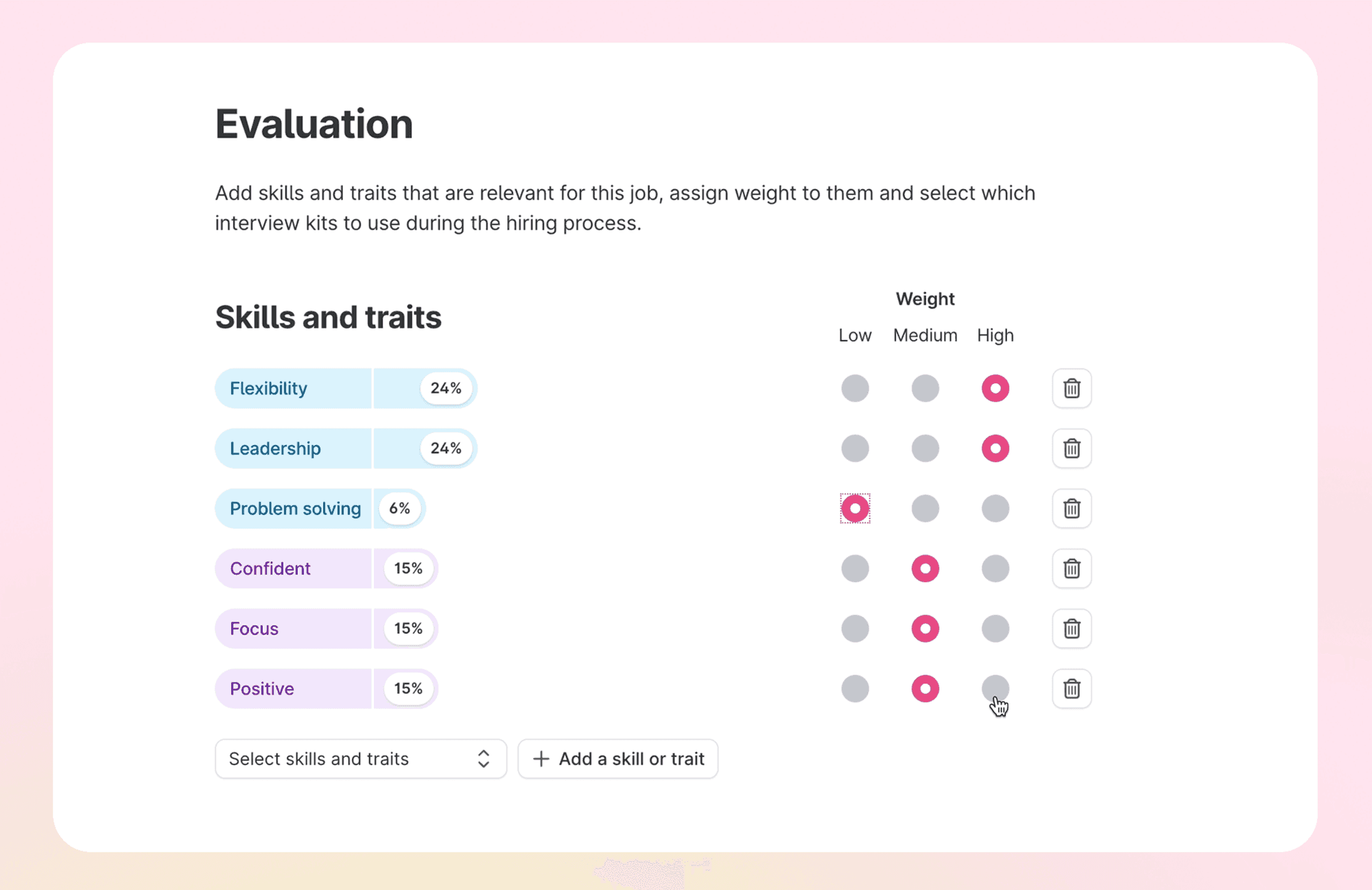
- Evaluation. Notes, scorecards or structured questions attached to the person, not to a private notebook.
- Communication. Messages, templates and a history, so that the third email to a candidate knows about the first two.
- Reporting. Counts that survive a question from finance: how many applied, where they dropped, how long a stage took.
On a plain Tuesday this core is what decides whether a recruiter can answer "where are we on the product designer role?" in ten seconds, standing in a corridor, without opening a second tab. That test is more useful than any category name, and it is the reason we keep returning to the candidate's path through the system.
Where products differ is the edge
Past the core, products spread out. Some add a career site builder. Some add scheduling. Some stop at the pipeline and expect you to connect everything else. None of this changes the category, but it changes the contract you are signing, which is why the next chapter matters.
What "recruitment management system" adds
Where the term appears on vendor sites it tends to cover a wider promise than "tracking". The tracking is the process side, the part that follows a person through stages. The management claim usually includes some of the work around it:
- creating and approving the job request before the ad exists
- publishing to a career site and to job boards
- sourcing and talent pools, so a role does not start from an empty list
- working with hiring managers inside the system rather than by email
- handing the hired person on to onboarding or the HRIS
That is a reasonable list, and a good ATS covers much of it. The difference is how much of it you get in the product you buy. Read a vendor's own feature page and note which of these appear as built in, which are premium and which are an integration. In Teamtailor, for example, the pricing page lists talent pools and a candidate CRM, career sites, roles and permissions and SSO as included, while requisitions with approval flows and divisions for multi-brand management are marked premium.[S12] We name that here because the split is the type of detail that is easy to miss in a demo and costly to find out later.
Why the label matters in a procurement
A procurement team that asks for a "recruitment management system" receives responses from ATS vendors, recruitment CRM vendors, agency software and job-board bundles. If the shortlist is built on the label, it is wider than anyone needs. If it is built on the six core items above, plus the two or three edges your process depends on, the answers compare.
Recruitment tracking software: the lighter end
The query "recruitment tracking software" is searched by buyers who often want something specific: a way to stop losing people. The products behind it run from a shared board to a full ATS. Both are legitimate, and which fits depends on volume and on the number of people who touch a hire.
When a lighter tracker is enough
A small team with a few roles a year and one decision maker can track candidates on a board and be fine. The trouble starts at the point where three things happen together: more than one person needs to see the candidate, someone asks for a number, and a person has asked to be removed from your records. A list cannot answer any of those without a person doing it by hand.
What to look for as you outgrow it
- A history per person. Every message, note and stage change attached to one record. In Teamtailor this is the Candidate Card, which holds the CV, hiring history, interview notes and chat history, and which the hiring team works on in real time.[S3]
- Access that matches the job. A hiring manager sees the candidates for their role, not the whole database.
- An audit trail. Who changed what, and when.
- Reporting you did not build yourself. If the numbers come from a spreadsheet someone maintains, they leave when that person does.
ATS and recruitment CRM: one system or two
The oldest source of confusion in this category is the ATS and the recruitment CRM. An ATS follows people who applied to a particular job. A recruitment CRM keeps a relationship going with people who have not applied, or who applied last year and were a close second. Plenty of vendors sell one without the other, and plenty sell both under one label, usually "recruitment management system" or "talent acquisition suite".
What matters is whether the two share a record. If a person in the CRM applies, does the ATS show the earlier conversations, or does a recruiter see a stranger? In a setup with two products, someone has to maintain the link, and on a busy week that person is not doing it.
In Teamtailor the two parts are one system. Connect sits on the career site, so candidates can show interest in working for you even when there is no suitable role, and you can reach them when relevant openings appear. Nurture campaigns are automated email sequences to the talent pool, and triggers and notifications keep appointments and candidate updates from slipping.[S3] The glossary has longer definitions of candidate relationship management and the recruitment CRM, and the product page shows how it looks in use.
If you are replacing a spreadsheet and a mailing tool, look for the shared record before the feature count. A talent pool nobody can find from the job it was built for does not shorten the next search.
ATS and HRIS: the "HR tracking system" problem
"HR tracking system" is the label most likely to send a buyer in the wrong direction. It can mean an ATS. It can also mean an HRIS, the system of record for employees: contracts, payroll data, leave, org charts. The two work on different people at different points. The ATS holds candidates up to the hire. The HRIS holds employees from the first day.
The useful question is where the handoff happens. When the offer is accepted, the data the ATS holds (name, contact details, role, start date, salary agreed) is needed in the HRIS. If no integration exists, someone retypes it. For larger groups the retyping is a cost and a source of errors in contracts.
Teamtailor's integrations page lists 80 integrations under HR systems, and the product page states 550+ integrations in all.[S4][S2] Check the list for your specific HRIS and ask what the integration moves and in which direction, because "integrates with" can mean anything from a full sync to a link. See also the glossary entries for HRIS and HR technology.
The handoff checklist
- Which fields move at hire, and who maps them
- If the integration runs both ways or only one
- What happens to a candidate record after the hire: kept, anonymised or deleted, and by what rule
- Who owns the link when either system changes
How to read a vendor's category label
A label is a marketing choice. These checks tell you more, and each can be done from the vendor's public pages and a demo.
Check 1: what happens to a person who never applied
Ask the vendor to show someone entering through the career site without a job, and show where that person appears afterwards. If the answer is "in a separate product", you are looking at an ATS plus a CRM, not a single recruitment management system.
Check 2: how a hiring manager works
Ask to see the hiring manager's login. In Teamtailor the Hiring Manager role can create and edit jobs and submit them as pending for release, but cannot publish or promote them, and sees only the candidates reachable through a hiring team or group.[S5] Whatever the vendor's version is, the point is the same: can the manager work in the system, and is that bounded by role?
Check 3: several brands or units
If you recruit for more than one brand, business unit or subsidiary, ask how they are separated. In Teamtailor this is the Divisions feature: a career site per division with its own URL, branding and content, division-specific templates and questions, and a Division Admin role. By default everything is shared, and you choose what to separate. It is a premium add-on, requested through your Teamtailor contact.[S6]
Check 4: who did what
Ask for the audit log. In Teamtailor, Company Admin users see it under Data and Privacy settings, once the feature is activated in the Add-on feature center. Each entry carries the date, time and actor, logs are accessible for 15 days by default, and admins can extend that to 30 days, with longer periods at extra cost.[S7] The retention is the part to compare across vendors, because a log you cannot look back through when a dispute comes in is of limited use.
Check 5: security evidence rather than a claim
The trust centre should list certifications and reports you can request. Teamtailor's lists GDPR, ISO/IEC 27001, ISO/IEC 27701, SOC 2 and ISO/IEC 42001:2023, with the ISO/IEC 27001 and 27701 certificates and the SOC 2 report listed as documents.[S8] Single sign-on in Teamtailor runs through SAML 2.0,[S9] and data can be processed in Europe (Ireland), North America (Oregon) or Asia-Pacific (Australia).[S10] Ask any vendor for the same three facts: the standard, the scope and the region.
What changes at 1,000 employees and more
At that size the category label stops mattering. Every system on the long list tracks applicants. What separates them is how they handle several entities, several countries and several people who have to say yes before a job opens. Five questions do most of the sorting.
| Question | Why it matters at this size | What Teamtailor states |
|---|---|---|
| How are brands and legal entities kept apart? | A candidate applies to one entity. Templates, questions and career sites differ per unit, and reporting still has to add up for the group. | Divisions: a career site, templates and questions per division and a Division Admin role, shared by default. A premium add-on.[S6] |
| Who approves a role before it opens? | Headcount and budget are signed off outside the recruiting team, and the trail has to be visible afterwards. | Requisitions with approval flows. An add-on at an additional cost.[S13] |
| How do people log in? | Hundreds of hiring managers cannot have separate passwords, and access has to end when someone leaves. | Single sign-on through SAML 2.0.[S9] |
| Where is the data processed? | Works councils, customers and regulators ask, and the answer has to be one region, in writing. | Europe (Ireland), North America (Oregon) or Asia-Pacific (Australia).[S10] |
| How far back can you see who did what? | Disputes and audits arrive months after the hire. | Audit log kept 15 days by default, 30 at most in the settings, longer at extra cost.[S7] |
Put the same five questions to every vendor and compare the answers, not the labels. Bring security, legal and, where you have one, the works council into the evaluation before the shortlist, not after it. The enterprise requirements in the complete guide go through each of these in more depth.
How this looks in Teamtailor
Teamtailor is an applicant tracking system, and the same product carries the parts other vendors split off under other names. This section is the short form, with sources, for the reader who wants to place it against the table in the second chapter.
- Tracking. Structured interviews and evaluations, smart scheduling, and advanced analytics with custom reports are listed as included.[S12] See reporting.
- Relationship work. Talent pools and a candidate CRM sit in the same system as the pipeline, with Candidate Cards, Connect and nurture campaigns.[S3]
- Career site. Career sites and employer branding are listed as included.[S12] See the career site page.
- Automation. Automated triggers and workflows are listed as included.[S12] See triggers.
- Collaboration. Hiring teams invite colleagues, with unlimited users.[S11] The pricing page lists unlimited job postings and unlimited users.[S12]
- Integrations. 550+, with an open API, so the stack can behave as one system.[S2] See integrations.
If you are comparing against a specific vendor, the comparison pages put Teamtailor next to them feature by feature, and the glossary entry on the applicant tracking system gives a shorter definition than this guide.
Where it might not fit
Two things in the lists above are premium and cost extra: requisitions with approval flows, and divisions with multi-brand management.[S12] A team whose process depends on formal requisition approval, or that recruits for many separate brands, should price those in from the start. A team of five hiring a handful of people a year may find a lighter tracker does the job for now.
Choosing, and what to do next
Pick by what the software has to do on your worst week, not by what it is called on the website. Three steps get you there without a long project.
- Write the six core items and your two or three edges. Edges are the things your process cannot do without: formal approvals, several brands, a particular HRIS, high volume.
- Ask each vendor the five checks above. Keep the answers in one table. The differences will be in the answers, not the category names.
- Run a real role through it. A job you are about to hire for, with a hiring manager who does not enjoy new tools. That role will show you more than any demo script.
For deeper reading, the complete guide to applicant tracking systems covers what changes past 500 employees, and the article on what an ATS is covers the basics. If you want to see Teamtailor against your list, book a demo and bring the two or three edges. If you want the cost first, see pricing: it is given after you tell Teamtailor about your company.[S12]